Building Smarter AI Teams with Microsoft AutoGen
- Turker Senturk
- AI
- 30 Oct, 2025
- 2 min read
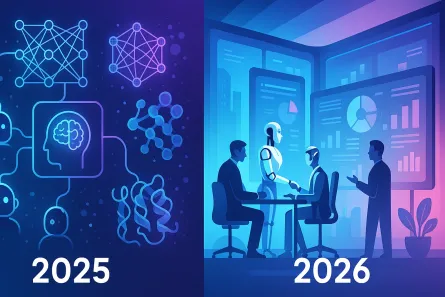
The field of artificial intelligence (AI) is undergoing a significant transformation, shifting from single-model implementations to multiagent systems. This move reflects broader industry trends towards more collaborative and dynamic AI architectures. Microsoft’s AutoGen is at the forefront of this change, enabling developers to build complex workflows involving multiple AI agents. By leveraging AutoGen, organizations can create more effective and autonomous AI teams, capable of tackling real-world problems with greater accuracy and nuance.
At its core, AutoGen allows developers to design and deploy multiagent workflows, where each agent plays a specific role, such as idea generation, criticism, or planning. This modular approach enables the creation of customized AI teams, each tailored to address specific challenges. For instance, a research copilot might consist of an analyst agent, a summarizer agent, and a QA agent, working together to provide more comprehensive and accurate results.
To build a multiagent workflow with AutoGen, developers can follow a step-by-step process. First, they need to install the necessary dependencies, including the pyautogen and openai libraries. Next, they define the agent configuration using JSON-like dictionaries, specifying roles, LLM settings, and behavioral flags. The UserProxyAgent acts as a bridge between human users and LLM agents, routing messages and optionally injecting prompts.
The AssistantAgent handles the actual task, such as answer generation, coding, or summarization. To improve quality, developers can introduce a CriticAgent to evaluate and refine the assistant’s outputs. AutoGen also supports group chats, allowing multiple agents to collaborate and reach a consensus over multiple rounds.
The benefits of multiagent systems like AutoGen are numerous. By delegating responsibilities to different agents, organizations can improve interpretability and trust in AI decision-making. The dialogue-driven architecture mirrors human workflows, enabling easy replication of agile-style processes. With AutoGen, developers can create production-ready AI teams that work with OpenAI APIs and pluggable backends, making it ideal for experimentation and later deployment.
As the AI landscape continues to evolve, the ability to build and manage AI teams will become a critical differentiator for organizations. Microsoft AutoGen is poised to play a significant role in this transition, enabling developers to create more collaborative, autonomous, and effective AI systems. By embracing this new paradigm, companies can unlock the full potential of AI and stay ahead of the curve in an increasingly competitive landscape.
Source: https://thenewstack.io/building-multiagent-workflows-with-microsoft-autogen
Share :
Stay Ahead in Tech
Join thousands of developers and tech enthusiasts. Get our top stories delivered safely to your inbox every week.
No spam. Unsubscribe at any time.