Weekly AI News Roundup: The 5 Biggest Stories (January 1-7, 2026)
- Turker Senturk
- AI
- 07 Jan, 2026
- 6 min read
Happy New Year, everyone! If you thought 2025 was wild for artificial intelligence, the first week of 2026 just looked at the calendar and said, “Hold my beer.”
We are only seven days into the year, and we’ve already seen enough major announcements to fill a whole quarter. CES 2026 in Las Vegas has been an absolute whirlwind, and combined with some massive regulatory shifts and research breakthroughs, it’s clear that this year isn’t going to be about incremental updates. We’re talking fundamental shifts in how AI is built, deployed, and governed.
I’ve sifted through the noise to bring you the five stories that actually matter this week. Let’s dive in.
1. DeepSeek R1: The Open-Source “Davids” Challenge the “Goliaths”
If there’s one story that dominated the chatter this week, it’s DeepSeek R1. This isn’t just another model release; it’s a direct challenge to the “bigger is better” philosophy that has ruled AI for the last few years.
DeepSeek, a Chinese AI company, released R1—an open-source reasoning model that is reportedly going toe-to-toe with the industry’s heaviest hitters. But here’s the kicker: they did it with a fraction of the resources. We’re talking about an efficiency breakthrough that questions whether you really need a trillion-dollar data center to build frontier AI.
Why should you care? For a long time, we assumed that only the massive tech giants could play at the high table of AI because of the sheer cost of compute. DeepSeek R1 suggests that smart engineering and architectural innovation might matter just as much as raw power. If this trend holds, we could see a democratization of AI that we didn’t think was possible this soon.
2. Nvidia Unveils the “Vera Rubin” Platform at CES
Speaking of raw power, Nvidia is definitely not slowing down. On Monday at CES, Jensen Huang took the stage to unveil the Vera Rubin computing platform.
This is Nvidia’s big bet for 2026. The platform is headlined by the Vera Rubin superchip, which combines one Vera CPU and two Rubin GPUs into a single beast of a processor. But it’s not just about speed; it’s about what this chip is designed for. Nvidia is pivoting hard toward Agentic AI—systems that don’t just chat with you but actively plan, reason, and execute tasks autonomously.
The architecture is specifically built to handle “mixture-of-experts” (MoE) models efficiently. Nvidia sees the writing on the wall: 2026 is going to be the year of the AI Agent, and they are building the engine to run it.
3. “Physical AI” Steps Into the Real World
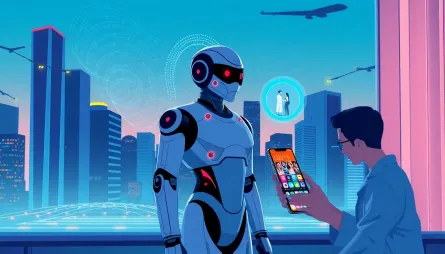
If you walked the floor at CES this year, you couldn’t miss the theme: Physical AI.
We’ve spent the last few years amazed by AI on our screens—chatbots, image generators, video tools. But 2026 is marking the moment AI gets a body. Nvidia and Siemens announced a massive partnership to build an “Industrial AI Operating System,” which sounds like sci-fi but is actually about bringing intelligent automation to factories and logistics chains.
We also saw Samsung pushing their “Vision AI Companion,” and a whole slew of robotics announcements. These aren’t the rigid, pre-programmed robots of the past. These are adaptive machines that learn from their environment. The line between “software” and “hardware” is getting blurrier by the day, and it’s fascinating to watch.
4. The Federal vs. State Regulation Showdown
While the tech world was partying in Vegas, a massive legal storm was brewing in Washington.
President Trump’s recent executive order, “Ensuring a National Policy Framework for Artificial Intelligence,” has effectively thrown down the gauntlet to state regulators. The order aims to establish a uniform federal policy that would override state-level laws.
Here’s the conflict: Just a week ago, on January 1st, fierce new AI laws went into effect in states like California (the TFAIA) and Texas. These laws mandate strict transparency and safety measures. The federal order argues that a patchwork of state laws hurts innovation and interstate commerce.
Legal experts are predicting a messy constitutional battle. This isn’t just legal jargon; the outcome will decide who gets to set the safety rails for the AI tools we use every day. Expect this to get heated.
5. Learning Without Big Data?
Finally, a bit of mind-bending science. Researchers dropped a bombshell study this week suggesting that we might not need massive datasets to train powerful AI after all.
The prevailing wisdom—the “scaling laws”—said that to get smarter AI, you need more data and more compute. But new research into brain-inspired architectures shows that some models can produce complex, brain-like activity without any traditional training.
This is huge because we are running out of high-quality human data to train these models on. If we can get smarter AI through better architecture rather than just feeding it more internet text, it solves one of the biggest bottlenecks in the industry. It aligns perfectly with what we saw from DeepSeek: efficiency is the new scale.
The Bottom Line
If the first week is any indication, 2026 is going to be a year of practicality and efficiency. We’re moving away from the hype of “magic chatbots” and toward efficient, agentic, physical, and (hopefully) well-regulated AI that actually does work in the real world.
Stay tuned. It’s going to be a wild ride.
Sources & Further Reading
Story #1: DeepSeek R1
Story #2: Nvidia Vera Rubin
- Yahoo Finance: Nvidia launches Vera Rubin
- DirectIndustry: CES 2026 Innovation
- Motley Fool: Micron Surges on AI Demand
Story #3: Physical AI
- Samsung: Your Companion to AI Living
- Engadget: CES 2026 Live Updates
- PBS News: Tech announced on Day 1 of CES 2026
Story #4: Regulation Battle
- K&L Gates: New State AI Laws
- Morrison Foerster: New York Enacts RAISE Act
- NatLawReview: AI Executive Order Legal Battles
Story #5: Research Breakthroughs
Share :
Stay Ahead in Tech
Join thousands of developers and tech enthusiasts. Get our top stories delivered safely to your inbox every week.
No spam. Unsubscribe at any time.