Artificial Neurons Mimic Brain Cells, Revolutionizing AI Efficiency
- Turker Senturk
- AI
- 05 Nov, 2025
- 3 min read
Breaking Through the AGI Barrier
The quest for artificial general intelligence (AGI) has been a longstanding goal in the field of artificial intelligence. Recently, a breakthrough by researchers at the University of Southern California (USC) has brought us closer to achieving this goal by creating artificial neurons that mimic the behavior of real brain cells.
What this means: The team has paved the way for more efficient and sustainable AI systems that learn like the human brain.
The Neuromorphic Computing Revolution
This breakthrough reflects broader industry trends towards developing more brain-like computing systems, known as neuromorphic computing.
Traditional Computing vs. Brain-Inspired Computing
Von Neumann Architecture (Traditional):
- Backbone of modern computing
- Facing significant challenges in energy efficiency
- Limited scalability for AI workloads
Neuromorphic Computing (Brain-Inspired):
- Mimics biological neural networks
- Potential to revolutionize AI approaches
- Enables machines to learn and adapt in a more human-like manner
How the Artificial Neurons Work
The USC team, led by Professor Joshua Yang, has developed a new class of artificial neurons with groundbreaking capabilities:
Technical Innovation
- Technology: Ion-based diffusive memristors
- Components: Silver ions combined with oxide materials
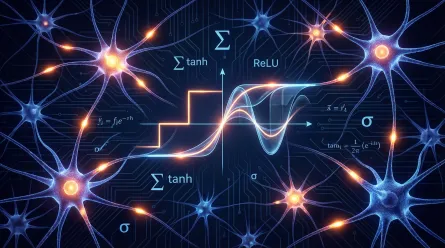
- Function: Generate electrical pulses that replicate natural brain functions
Capabilities
- Learning
- Movement coordination
- Planning and decision-making
Hardware-Based Learning: A Game-Changer
One of the key advantages of this approach is hardware-based learning — fundamentally different from software-based learning in traditional AI systems.
“The brain learns by moving ions across membranes, achieving energy-efficient and adaptive learning directly in hardware.”
— Professor Joshua Yang, USC
Why This Matters
- Energy efficiency: Significantly reduces AI system power consumption
- Sustainability: Makes AI more environmentally friendly
- Performance: Direct hardware learning vs. software simulation
Potential Applications
The implications of this breakthrough are far-reaching across multiple domains:
- Computer vision — More efficient image and video processing
- Natural language processing — Better language understanding and generation
- Robotics — Adaptive and intelligent robotic systems
- Neuroscience research — New insights into brain function
“Even more exciting is the prospect that such brain-faithful systems could help us uncover new insights into how the brain itself works.”
— Professor Joshua Yang
The Road Ahead
Next Steps for the USC Team
The researchers are now focused on:
- Integration: Connecting large numbers of artificial neurons together
- Testing: Replicating the brain’s efficiency and capabilities at scale
- Validation: Demonstrating practical advantages over traditional AI systems
Expected Outcomes
As neuromorphic computing continues to evolve, we can expect significant advances in:
- AI energy efficiency
- System sustainability
- Overall performance and capabilities
- Understanding of human brain function
Bottom Line: By developing computing systems that truly mirror the brain’s architecture, USC researchers are not just building better AI — they’re potentially unlocking the secrets of human intelligence itself.
Source: https://www.sciencedaily.com/releases/2025/11/251105050723.htm
Tags :
Share :
Stay Ahead in Tech
Join thousands of developers and tech enthusiasts. Get our top stories delivered safely to your inbox every week.
No spam. Unsubscribe at any time.