Advancing Science and Math with GPT-5.2
- Turker Senturk
- AI
- 12 Dec, 2025
- 2 min read
Key Highlights
- Breakthrough Model: GPT-5.2 is the strongest model yet for math and science work, accelerating scientific research.
- Improved Performance: GPT-5.2 Pro and GPT-5.2 Thinking achieve state-of-the-art results on benchmarks like FrontierMath and GPQA Diamond.
- Real-World Impact: GPT-5.2 contributes to resolving open research problems in statistical learning theory, demonstrating its potential to support scientific inquiry.
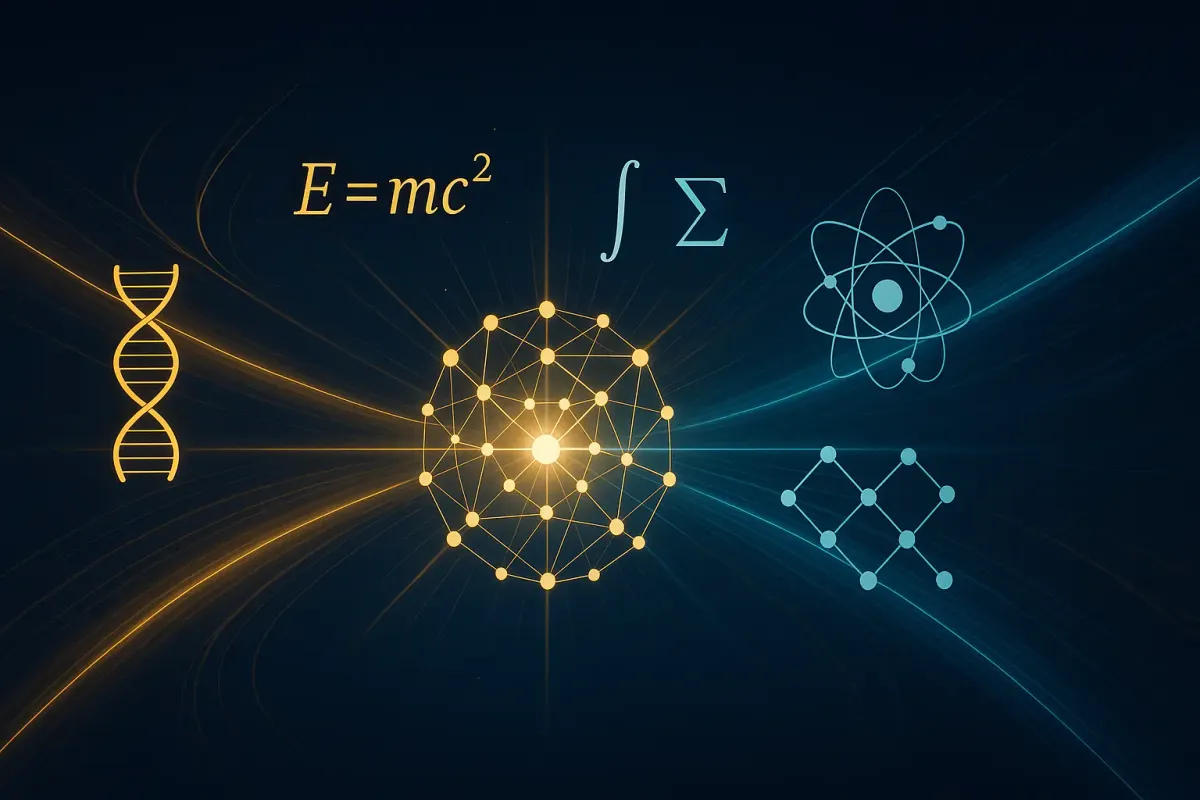
Imagine a future where scientific breakthroughs happen at an unprecedented pace, thanks to the power of artificial intelligence. With the introduction of GPT-5.2, we’re one step closer to making that vision a reality. This revolutionary model is designed to accelerate scientific research, helping scientists explore more ideas, test them faster, and turn discoveries into impact.
What’s New in GPT-5.2?
GPT-5.2 Pro and GPT-5.2 Thinking are the latest advancements in AI technology, specifically designed for scientific and mathematical work. These models demonstrate stronger general reasoning and abstraction capabilities, enabling them to follow multi-step logic, keep quantities consistent, and avoid subtle errors. This is particularly significant in scientific workflows, such as coding, data analysis, and experimental design.
Real-World Applications
The capabilities of GPT-5.2 are not limited to narrow skills; they represent broad, transferable reasoning skills that matter across science, engineering, and real-world decision-making. On the GPQA Diamond benchmark, GPT-5.2 Pro achieves an impressive 93.2%, followed closely by GPT-5.2 Thinking at 92.4%. Additionally, GPT-5.2 Thinking sets a new state of the art on FrontierMath, solving 40.3% of expert-level mathematics problems.
A New Era of Scientific Collaboration
GPT-5.2 is not only strong at graduate-level science problems but also contributes solutions to previously unsolved questions in mathematics and the sciences. A recent case study demonstrates how GPT-5.2 Pro helped resolve an open research problem in statistical learning theory. The model was able to provide a detailed, structured argument that merited careful human study and refinement, showcasing the potential for AI to support mathematical reasoning and accelerate early-stage exploration.
Why This Matters
The introduction of GPT-5.2 marks a significant step forward in the advancement of scientific research. By leveraging the power of AI, scientists can streamline significant aspects of theoretical work, freeing up time for more complex and creative tasks. As we look to the future, it’s clear that the collaboration between human researchers and AI systems like GPT-5.2 will be crucial in driving innovation and discovery.
Source: Official Link
Tags :
Share :
Stay Ahead in Tech
Join thousands of developers and tech enthusiasts. Get our top stories delivered safely to your inbox every week.
No spam. Unsubscribe at any time.